






A few years ago I went to the Austrian factory where they pioneered the Ionic Protect plasma treatment for wool clothes moth. We did a spot of negotiating, and they agreed that if I could send them a minimum of 5 tons of Herdwick wool at a time, they would produce the felt for me.
“Sure thing!” I said. “We have a deal”. In my head I’m thinking, “Crumbs. Where do I get 5 tons of Herdwick wool from??”. It’s a fact that 1kg of Herdwick wool off a sheep’s back will only weigh about 650g when it’s washed. Sheep are filthy mucky things. Actually, there’s also a lot of sheep grease in there – lanolin – which is extracted during the washing process and sold to the cosmetics industry.
So to get 5 tons of clean wool to send to Austria, I would need to get 7.5 tons of greasy wool. I’d heard that the wool auctions were a bit of a bear pit, and if you were a novice then the professional wool merchants could make it difficult and expensive. Also, the supply could be erratic. There’s a fairly limited supply of Herdwick wool, maybe 70 tonnes a year, and if the wool price had been low the year before farmers tend not to bother sending their wool to the auction.
The wool board have experts who grade every single fleece that comes in. I’ve watched them do it, it’s a fascinating skill. A wool bag contains around 70 fleeces, each tied on its own in a bundle. The graders unbundle it, feel the fleece, then chuck it into the appropriate bin. The wool is graded according to the colour and how fine it is. So it’s a real skill, but the time and input is an added cost to be deducted from the wool cheque. For the Chimney Sheep®, so long as it’s Herdwick, it doesn’t matter what colour it is. Same with our rugs, and all the other things we make with Herdwick wool. Actually having a good mix of dark, light, and everything inbetween is a benefit.

Everything was pointing to one thing: collect the wool directly from the farmers. So, Operation Wool was born. That first autumn I managed to get the 7.5 tons of wool collected up. It was sent by lorry to the scourers in Bradford, then off to Austria to get magicked into moth-proof felt. We have a code on every Chimney Sheep® so we can trace it to when it was made and which company supplied the materials. The HW element is for Hogwarts. Our own little joke which stuck.

The first season, it was difficult to persuade farmers that I was serious. They were reluctant to send their wool to me, in case it caused a problem with the wool board. Then year on year, more farmers get in touch. We had a couple of bumper years selling Chimney Sheep® so the supply went from 6.5 tons to 15, 20, 25....One year, we appeared on Countryfile and the sales went mad. So I found even more farmers and started getting even more wool. After the Countryfile year, sales dipped a bit. Even though it’s a money-saving product, and lasts 10 years, it’s counter intuitive to spend money to save money, so in the cost-of-living crisis it’s harder to get the message out about the need to draught-proof the chimney.
Now I have my list of farmers I’ve been buying wool from. Some of them have been supplying wool right from the start, since 2018. I don’t want to be erratic, and buy from them some years and not others. So I always take wool from the regulars, and pay the best rate I can for it. The rate never goes down, even if other wool prices decrease. Sometimes I try to say sorry but I’ve got more wool than I know what to do with and I can’t take it this year, and they say that in that case they will burn it since it’s not fetching a good price at auction. I hate waste so I say go on then I’ll take it, I’ll find a use for it somehow.
And we do find uses. It seems a bit of a shame to use good Herdwick wool for mulch, but it is excellent for that purpose. Especially when the weather is dry, one of wool’s many superpowers is that it is excellent at retaining water. Plants mulched with greasy wool have done well this year. The wool slowly biodegrades to deliver nutrients to the plants, plus it suppresses weeds AND keeps slugs off.
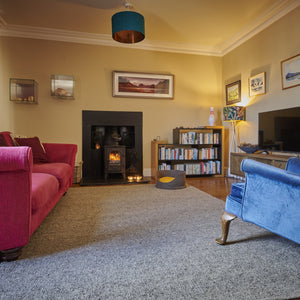
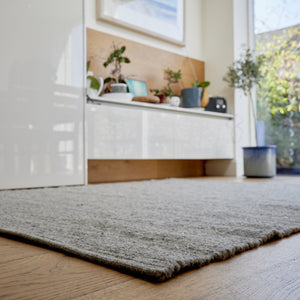
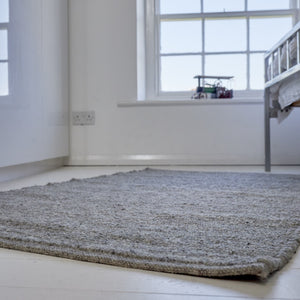
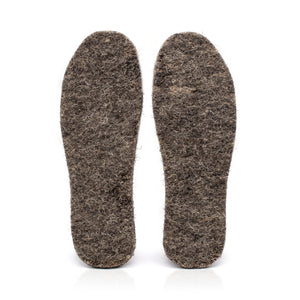
When we cut out the Chimney Sheep®, there is waste wool (just like when you cut biscuits out of dough). The bigger scraps are cut into Snug Feet® and the smaller scraps are cut into bits for felt shillies. We still end up with a fair amount of scraps so this is sent off to one of the Yorkshire spinning mills where it is separated out, mixed with an equal amount of virgin Herdwick wool and made into our project felt. This is sold as it is, for projects, but we also use it in a range of other things. We’ve been making it into rather nice mulch mats which have been selling very well this year. We use the washed wool for packing up the ollas and terracotta worm composter, we sell the washed wool as a craft item….and of course there are our gorgeous rugs made of 50% Herdwick and 50% Texel.
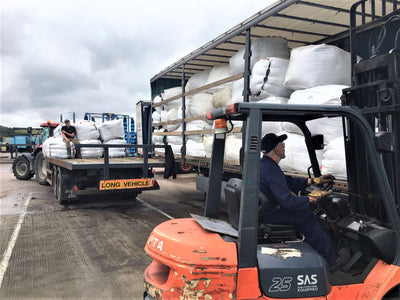
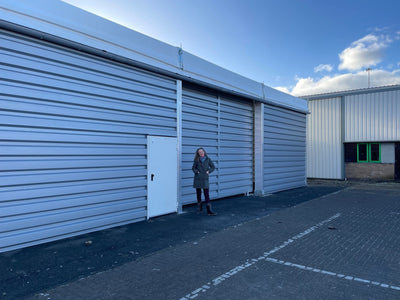
It’s just that at this time of year, we have around 30 tons of greasy wool coming in. This can get logistically complicated, coordinating farmer deliveries and finding space for all the bags full of wool. In addition, the finished felt comes back from Austria at the same time. 3 articulated lorry loads of it have come in this summer. Wool is bulky stuff and it takes up a lot of warehouse space. Um, and I haven’t mentioned the money side of it yet. That is a lot of capital tied up in wool stock. Cash flows in the wrong direction at this time of year, which is all part of Wool Stress.
Once we’ve got a good lot of the greasy wool in, we bale it up and send it off to the scourers. When I book it in, they somewhat apologetically say that it won’t be ready for a couple of months. Not a problem! I say generously, but really the longer they take over it, the better. We’ve still got plenty of washed wool from last year. And back to that cash flow thing again, they won’t invoice until the job is done, so that helps too.
We have wool in the wool shed, wool in the warehouse, wool at the scourers, wool products on our shelves and in Amazon warehouses. But most of all, the best place for it to be, is doing the job it’s meant to do in people’s homes and gardens. That is the only remedy for Wool Stress. Our mantra this month is Wool In, Wool Out.